
St Darerca of Ireland, the sister of Saint Patrick, the enlightener of Ireland
- Jul 24
- 3 min read
Updated: 3 days ago

Saint Darerca is honoured in the tradition of the Church of Ireland as a holy and pious woman, an example of Christian life, family service, and zeal for the spread of the faith in the first centuries of the Christianization of Ireland.
According to tradition, Saint Darerca was the sister of Saint Patrick, the enlightener of Ireland. Raised in a believing family, she received a foundation in Christian life from childhood, becoming accustomed to prayer, almsgiving, and the fear of God.
At a time when faith was taking root in those lands, she showed steadfastness and love for the Gospel, supporting the missionary work of her relatives and the clergy. Saint Darerca lived a family life, being known for the piety and good order of her home. Tradition recalls that she was blessed with many sons, several of whom became clergy and servants of the Church, bishops or priests, contributing to the strengthening of the faith in different regions of Ireland. Thus, her home became a true school of holiness, where children were raised in the fear of God and in love for serving their neighbour. Tradition remembers her as a wise and advisory woman, who supported the work of the Church through good word and good deed. She welcomed those in need into her home and supported the mission of evangelization by raising a generation of Christ’s servants. Thus, without seeking human glory, she became a spiritual mother to many.
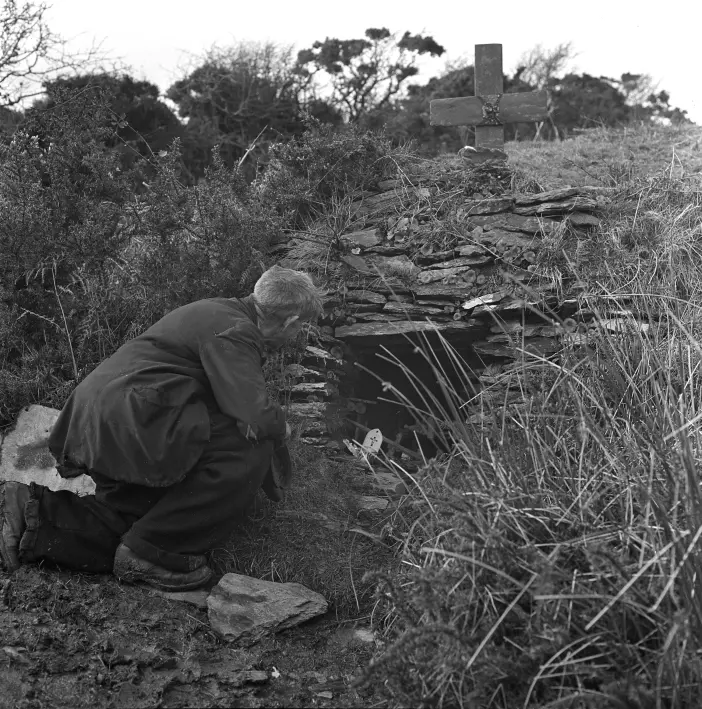
"local tradition mentions that St Darerca came with a number of nuns to Valentia and they had a convent in Ballymanagh. The well in which the nuns used get the water is called ‘St Dererca’s well’. Formerly a ‘pattern’ used to held at this well; but at that time intoxicating drinks were very cheap and several people were drunk at the pattern. The priests then ordered the pattern to be discontinued. St Darerca’s Well, also known as Sunday’s Well, Tobar Rí an Domhnaigh, is situated on scenic Valentia Island in Kerry."
After a long life spent in faith and in the service of God, Saint Darerca prepared her end through prayer and peace of mind, entrusting her soul to the Lord in the 5th century.
"Her fame, apart from her relationship to Ireland's national apostle, stands secure as not only a great saint but as the mother of many saints."
When Saint Patrick visited Bredach, as is found in the "Tripartite Life of St. Patrick," he ordained Aengus mac Ailill, the local chieftain of Moville, now a seaside resort for the citizens of Derry. While there he found "the three deacons," his sister's sons, namely, Saint Reat, Saint Nenn, and Saint Aedh, who are commemorated respectively on 3 March, 25 April, and 31 August.
St Darerca was twice married. Among her husbands, according to histories in Brittany, she was the second wife of Conan Meriadoc and the mother of his eldest son, Gradlon Mawr who became Gradlon the Great, King of Brittany.
Darerca's second husband, Chonas the Briton, founded the church of Both-chonais, now Binnion, Parish of Clonmany, in the barony of Inishowen, County Donegal. She had children by both husbands, all of whom, according to Colgan, became bishops (according to Breton history at least one became King of Brittany, rather than serve the church as a bishop).

"From the "Tripartite Life of Saint Patrick" it is evident that there were four sons of Darerca by Chonas, namely four bishops, Saint Mel of Ardagh, Ríoch of Inisboffin, Saint Muinis of Forgney, County Longford, and Saint Maelchu. It is well to note that another Saint Muinis, son of Gollit, is described as of Tedel in Ara-cliath."
St Darerca had two daughters, Saint Eiche of Kilglass and Saint Lalloc of Senlis. Her first husband was Restitutus the Lombard, after whose death she married Chonas the Briton. By Restitutus she was mother of Saint Sechnall of Dunshaughlin; Saint Nectan of Killunche, and of Fennor (near Slane); of Saint Auxilius of Killossey (near Naas, County Kildare); of Saint Diarmaid of Druim-corcortri (near Navan); of Dabonna, Mogornon, Drioc, Luguat, and Coemed Maccu Baird (the Lombard) of Cloonshaneville, near Frenchpark, County Roscommon.
Four other sons are assigned to her by old Irish writers, namely Saint Crummin of Lecua, Saint Miduu, Saint Carannog, and Saint Maceaith. According to Colgan, the latter is identical with Liamania but must not be confounded with Saint Monennia, or Darerca, whose feast is on 6 July.


Comments