
Venerable Bede, A gift to all
- Aug 3
- 15 min read
Updated: 15 hours ago
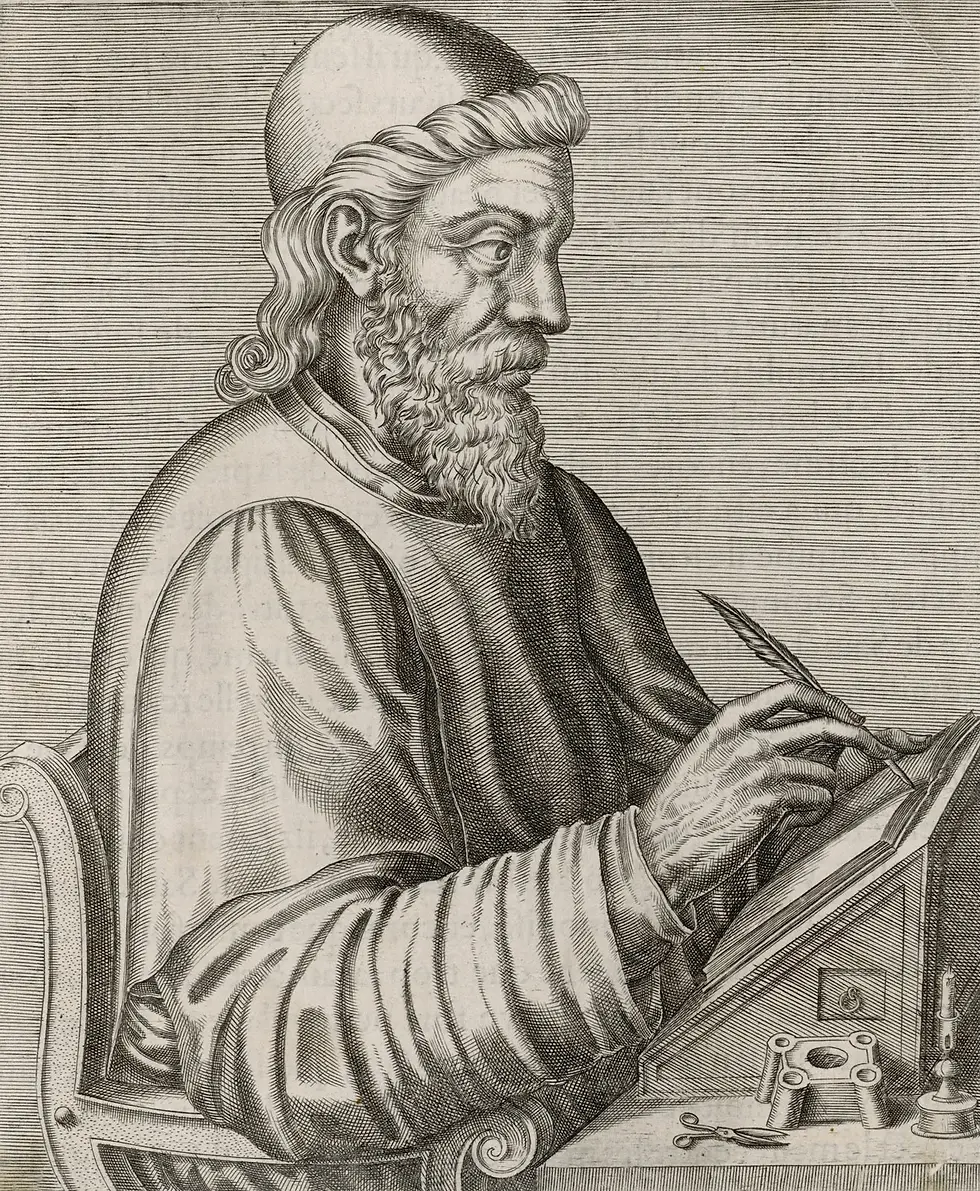
"There are so many exceptional figures from the sixth and seventh centuries on the British islands that it is difficult to isolate one or two of them. Without Bede, ‘the first scientific genius of the Germanic people,’ as R.W. Southern calls him, we would, of course, know very little about any of them.
His homilies on the Gospels stand beside those of St. Gregory the Great as a monument of patristic writing. He was a monk and a scholar. But his scholarship was the servant of his love for the truth and the Gospel. This is why his writings were of such value to the missionaries from these lands to Germany. And it is why they endure as devotional reading to this day." Fr. John Nankivell
Few lives afford less material for the biographer than Bede’s; few seem to possess a more irresistible fascination. Often as the simple story has been told, the desire to tell it afresh appears to be perennial. And yet it is perhaps as wholly devoid of incident as any life could be.
"The short autobiographical sketch at the end of the “Ecclesiastical History” tells us practically all: that he was born in the territory of the twin monastery of Wearmouth and Jarrow; that at the age of seven he was sent by his kinsfolk to be brought up, first under the Abbot Benedict, afterwards under Ceolfrid; that in his nineteenth year (the canonical age was twenty-five) he was admitted to the diaconate, and received priest’s orders in his thirtieth year, in both instances at the hands of John, Bishop of Hexham, and by order of the Abbot Ceolfrid; that he spent his whole life in the monastery in learning, in teaching, and in writing, and in the observance of the monastic rule and attendance at the daily services of the Church. "
His Life and Mission
Of his family we know nothing; the name Bede (/biːd/; Old English: Bēda [ˈbeːdɑ]; appears to have been not uncommon.
"Almost everything that is known of Bede's life is contained in the last chapter of his Ecclesiastical History of the English People, a history of the church in England. It was completed in about 731, and Bede implies that he was then in his fifty-ninth year, which would give a birth date in 672 or 673."
A minor source of information is the letter by his disciple Cuthbert (not to be confused with the saint Cuthbert, who is mentioned in Bede's work) which relates Bede's death. Bede, in the Historia, gives his birthplace as "on the lands of this monastery". He is referring to the twin monasteries of Monkwearmouth and Jarrow

, in modern-day Wearside and Tyneside respectively. There is also a tradition that he was born at Monkton, two miles (3.2 km) from the site where the monastery at Jarrow was later built. Bede says nothing of his origins, but his connections with men of noble ancestry suggest that his own family was well-to-do.
At the age of seven, Bede was sent as a puer oblatus to the monastery of Monkwearmouth by his family to be educated by Benedict Biscop and later by Ceolfrith. Bede does not say whether it was already intended at that point that he would be a monk.
It was fairly common in Ireland at this time for young boys, particularly those of noble birth, to be fostered out as an oblate; the practice was also likely to have been common among the Germanic peoples in England. Monkwearmouth's sister monastery at Jarrow was founded by Ceolfrith in 682,

and Bede probably transferred to Jarrow with Ceolfrith that year.
The dedication stone for the church had survived as of 1969; it is dated 23 April 685, and as Bede would have been required to assist with menial tasks in his day-to-day life it is possible that he helped in building the original church.
When Bede was about 18 years old, Adomnán, the abbot of Iona Abbey, visited Monkwearmouth and Jarrow. Bede would probably have met the abbot during this visit, and it may be that Adomnán sparked Bede's interest in the Easter dating controversy.
In about 692, in Bede's nineteenth year, Bede was ordained a deacon by his diocesan bishop, John, who was Bishop of Hexham. The canonical age for the ordination of a deacon was 25; Bede's early ordination may mean that his abilities were considered exceptional, but it is also possible that the minimum age requirement was often disregarded. There might have been minor orders ranking below a deacon; but there is no record of whether Bede held any of these offices.
The epithet “Venerable,” commonly attached to his name, has given rise to more than one legend. It was apparently first applied to him in the ninth century, and is said to have been an appellation of priests. The best known of these legends is Fuller’s story of a certain “dunce monk” who set about writing Bede’s epitaph, and being unable to complete the verse, “Hic sunt in fossa Bedae … ossa,” went to bed with his task unfinished. Returning to it in the morning, he found that an angel had filled the gap with the word “venerabilis.”
"Another account tells how Bede, in his old age, when his eyes were dim, was induced by certain “mockers” to preach, under the mistaken belief that the people were assembled to hear him. As he ended his sermon with a solemn invocation of the Trinity, the angels (in one version it is the stones of a rocky valley) responded “Amen, very venerable Bede.”
The land on which Bede was born was granted by Egfrid to Benedict Biscop for the foundation of the monasteries a short time after the birth of Bede.

Wearmouth was founded in 674, Jarrow in 681 or 682. Bede was among those members of the community who were transferred to Jarrow under Abbot Ceolfrid, and under his rule and that of his successor, Huaetbert, he passed his life. With regard to the chief dates, the authorities differ, Simeon of Durham and others placing his birth as late as 677. Bede himself tells us that he was in his fifty-ninth year when he wrote the short autobiography at the end of the History. That work was finished in 731, and there seems to be no good reason to suppose that the autobiographical sketch was written at a later time. We may infer then that he was born in 673, that he was ordained deacon in 691 and priest in 702.
Beyond the testimony borne to his exceptional diligence as a student in a letter from Alcuin to the monks of Wearmouth and Jarrow, we hear nothing of his childhood and early youth.
"There is an incident in the anonymous Life of Ceolfrith which may refer to the young Bede. A plague swept through Ceolfrith’s monastery in 686, taking most of the monks who sang in the choir for the church services. Only the abbot and a young boy raised and educated by him remained. This young boy “is now a priest of the same monastery and commends the abbot’s admirable deeds both verbally and in writing to all who desire to learn them.”
Grieved by this catastrophe, Ceolfrith decided that they should sing the Psalms without antiphons, except at Matins and Vespers. After a week of this, he went back to chanting the antiphons in their proper place. With the help of the boy and the surviving monks, the services were performed with difficulty until other monks could be brought in and trained to sing.
This little boy is described as being, at the time the History was written, a priest of that monastery who “duly, both by his words and writings, commends the Abbot’s praiseworthy deeds to all who seek to know them,” and he has generally been supposed to be Bede.
In the “Ecclesiastical History” (IV, 3) there is an allusion to Bede’s teachers, one of whom, Trumbert, educated at Lastingham under Ceadda, is mentioned by name. The monastery of Wearmouth and Jarrow must have offered exceptional facilities for study. Benedict had enriched it with many treasures which he brought with him from his travels. Chief among these was the famous library which he founded and which was enlarged by Abbot Ceolfrid. Here Bede acquired that wide and varied learning revealed in his historical, scientific, and theological works. He studied with particular care and reverence the patristic writings; his theological treatises were, as he says, “compiled out of the works of the venerable Fathers.”

He must have had a considerable knowledge of Greek, probably he knew some Hebrew. Though he is not wholly free from the mediaeval churchman’s distrust of pagan authors, he constantly betrays his acquaintance with them, and the sense of form which must unconsciously influence the student of classical literature has passed into his own writings and preserved him from the barbarism of monkish Latin. His style is singularly clear, simple, and fluent, as free from obscurity as from affectation and bombast.
Thus was the foundation laid of that sound learning upon which his widespread influence both as a teacher and writer was reared. “I always took delight,” he tells us, “in learning, or teaching, or writing.” Probably his writing was, as is so often the case, the outcome of his teaching; his object in both is to meet “the needs of the brethren.” One of his pupils was Archbishop Egbert, the founder of the school of York, which gave a fresh impulse to learning, not only in England, but through Alcuin in France, at a time when a revival was most to be desired.
It was to Egbert that he paid one of the only two visits which he records. In the “Epistola ad Ecgbertum” he alludes to a short stay he had made with him the year before, and declines, on account of the illness which proved to be his last, an invitation to visit him again. He visited Lindisfarne in connection with his task of writing the life of Cuthbert. Otherwise we have no authentic record of any absence from the monastery. The story that he went to Rome at the request of Pope Sergius, founded on a statement of William of Malmesbury, is now regarded as highly improbable. The oldest MS. of the letter of Sergius, requesting Ceolfrid to send one of his monks to Rome, has no mention of the name of Bede. If such an event had ever disturbed his accustomed course of life, it is inconceivable that he should nowhere allude to it. Still less is the assertion that he lived and taught at Cambridge one which need be seriously debated by the present generation.
We may fairly assume that, except for a few short absences such as the visits to York and Lindisfarne, his whole life was spent in the monastery. It must have been a life of unremitting toil. His writings, numerous as they are, covering a wide range of subjects and involving the severest study, can only have been a part of his work; he had, besides, his duties as priest, teacher, and member of a religious community to fulfil. Even the manual labour of his literary work must have been considerable. He did not employ an amanuensis, and he had not the advantages with regard to copyists which a member of one of the larger monasteries might have had. “Ipse mihi dictator simul notarius (= shorthand writer) et librarius (= copyist),” he writes. Yet he never flags. Through all the outward monotony of his days his own interest remains fresh. He “takes delight” (“dulce habui”) in it all. It is a life full of eager activity in intellectual things, of a keen and patriotic interest in the wider life beyond the monastery walls, which shows itself sadly enough in his reflections on the evils of the times, of the ardent charity which spends itself in labour for the brethren, and, pervading the whole, that spirit of quiet obedience and devotion which his own simple words describe as “the observance of monastic rule and the daily charge of singing in the Church.
” We can picture him, at the appointed hours, breaking off his absorbing occupations to take his place at the daily offices, lest, as he believed, he should fail to meet the angels there. Alcuin records a saying of his, “I know that angels visit the canonical hours and the congregations of the brethren. What if they do not find me among the brethren? May they not say, ‘Where is Bede?’ ”
It is probably here, in this harmony of work and devotion, that we may find the secret of the fascination in the record of his uneventful days. It reconciles the sharp antithesis between the active and the contemplative life. It seems to attain to that ideal of “toil unsever’d from tranquillity” which haunts us all, but which we have almost ceased to associate with the life of man under present conditions. Balance, moderation, or rather, that rare quality which has been well called “the sanity of saintliness,” these give a unity to the life of Bede and preserve him from the exaggerations of the conventual ideal. With all his admiration for the ascetic life, he recognizes human limitations. It is cheering to find that even he felt the need of a holiday.
“Having completed,” he writes, “the third book of the Commentary on Samuel, I thought I would rest awhile, and, after recovering in that way my delight in study and writing, proceed to take in hand the fourth.” Intellectual power commands his homage, but his mind is open to the appreciation of all forms of excellence. It is the unlearned brother, unfit for study and occupied in manual labour, to whom, in his story, it is vouchsafed to hear the singing of the angels who came to summon Ceadda to his rest. The life of devotion ranks highest in his estimation, but he records with approval how St. Cuthbert thought “that to afford the weak brethren the help of his exhortation stood in the stead of prayer, knowing that He Who said ‘Thou shalt love the Lord thy God,’ said likewise, ‘Thou shalt love thy neighbour as thyself.’ ” He tells us how St. Gregory bewailed his own loss in being forced by his office to be entangled in worldly affairs. “But,” adds the human-hearted biographer, “it behooves us to believe that he lost nothing of his monastic perfection by reason of his pastoral charge, but rather that he gained greater profit through the labour of converting many, than by the former calm of his private life.” Yet he holds that this immunity from the evil influence of the world was chiefly due to Gregory’s care in organizing his house like a monastery and safeguarding the opportunities for prayer and devotional study, even while he was immersed in affairs at the court of Constantinople, and afterwards, when he held the most onerous office in the Church.
This quality of sanity shows itself again in an unusual degree of fairness to opponents.
"The Paschal error, indeed, moves his indignation in a manner which is incomprehensible and distasteful to the modern reader, but even in the perverse and erring Celts he can recognize “a zeal of God, though not according to knowledge.” Aidan’s holiness of life wins from him a warm tribute of admiration. In the monks of Iona, the stronghold of the Celtic system, he can perceive the fruit of good works and find an excuse for their error in their isolated situation. "
In the British Church it is the lack of missionary zeal, rather than their attitude towards the Easter question, which calls forth his strongest condemnation.
A characteristic akin to this is his love of truth. As a historian, it shows itself in his scrupulous care in investigating evidence and in acknowledging the sources from which he draws. Nowhere is his intellectual honesty more apparent than in dealing with what he believes to be the miraculous element in his history. In whatever way we may regard these anecdotes, there can be no doubt that Bede took the utmost pains to assure himself of their authenticity. He is careful to acquire, if possible, first-hand evidence; where this cannot be obtained, he scrupulously mentions the lack of it. He admits only the testimony of witnesses of high character and generally quotes them by name.
These are but a few of the glimpses afforded us of the personality of Bede, a personality never obtruded, but everywhere unconsciously revealed in his work. Everywhere we find the impress of a mind of wide intellectual grasp, a character of the highest saintliness, and a gentle refinement of thought and feeling. The lofty spirituality of Bede, his great learning and scholarly attainment are the more striking when we reflect how recently his nation had emerged from barbarism and received Christianity and the culture which it brought with it to these shores.
The letter in which he declines Egbert’s invitation on the plea of illness is dated November, 734. If we may assume that his death took place on the eve of Ascension Day in 735, no long period of enfeebled health clouded the close of his life, and weakness never interrupted his work. His death has been described by his pupil, Cuthbert, who afterwards became Abbot of Wearmouth and Jarrow in succession to Huaetbert, in the letter quoted below. He was first buried at Jarrow but, according to Simeon of Durham, his relics were stolen by the priest, Elfred, and carried to Durham. In 1104, when the bones of Cuthbert were translated to the new Cathedral, those of Bede were found with them. Not long after, Hugh de Puisac erected a shrine of gold and silver, adorned with jewels, in which he placed them, along with the relics of many other saints. The shrine disappeared at the Reformation, and only the stone on which it rested remains.
His Repose
Saint Bede became ill in 735. For about two weeks before Pascha, he was weak and had trouble breathing, but experienced little pain. He remained cheerful and gave daily lessons to his students, then spent the rest of the day singing Psalms and giving thanks to God. He would often quote the words of Saint Ambrose, “I have not lived in such a way that I am ashamed to live among you, and I do not fear to die, for God is gracious” (Paulinus, Life of Saint Ambrose, Ch. 45).
In addition to giving daily lessons and chanting the Psalms, Saint Bede was also working on an Anglo-Saxon translation of the Gospel of Saint John, and also a book of extracts from the writings of Saint Isidore of Seville (April 4). On the Tuesday before the Feast of the Lord’s Ascension, the saint’s breathing became more labored, and his feet began to swell. “Learn quickly,” he told those who were taking dictation from him, “for I do not know how long I can continue. The Lord may call me in a short while.”

After a sleepless night, Saint Bede continued his dictation on Wednesday morning. At the Third Hour, there was a procession with the relics of the saints in the monastery, and the brethren went to attend this service, leaving a monk named Wilbert with Bede. The monk reminded him that there remained one more chapter to be written in the book which he was dictating. Wilbert was reluctant to disturb the dying Bede, however. Saint Bede said, “It is no trouble. Take your pen and write quickly.”
At the Ninth Hour, Bede paused and told Wilbert that he had some items in his chest, such as pepper, incense, and linen. He asked the monk to bring the priests of the monastery so that he could distribute these items to them. When they arrived, he spoke to each of them in turn, requesting them to pray for him and to remember him in the services. Then he said, “The time of my departure is at hand, and my soul longs to see Christ my King in His beauty.”
"That evening, Wilbert said to him, “Dear Master, there is one sentence left unfinished.”Bede said, “Very well, write it down.”Then the young monk said, “It is finished now.”Saint Bede replied, “You have spoken truly, it is well finished.” Then he asked Wilbert to raise his head so that he could see the church where he used to pray. After chanting, “Glory to the Father, and to the Son, and to the Holy Spirit” to its ending, Saint Bede fell asleep in the Lord Whom he had loved."
For his death, the year 735, that is the the date given in the “Continuation,” seems to be supported by the evidence of the letter of Cuthbert to Cuthwin (v. infra). From this it appears that he died on a Wednesday, which nevertheless is called Ascension Day, implying, doubtless, that his death occurred on the eve, after the festival had begun, according to ecclesiastical reckoning. It is further explained that Ascension Day was on the 26th of May (“VII Kal. Junii”),1 which was actually the case in the year 735.
Although Saint Bede reposed on May 25, the eve of the Ascension, he is commemorated on the 27th, since the Feast of Saint Augustine of Canterbury is appointed for the 26th. His body was first buried in the south porch of the monastery church, then later transferred to a place near the altar. Today his holy relics lie in Durham Cathedral, in the Galilee chapel.
Saint Bede is the only Englishman mentioned by Dante in the DIVINE COMEDY (Paradiso).
-Paradiso Canto X:130-148 Isidore: Bede: Richard of St. Victor: Sigier

‘...Next, see the glowing breath of Isidore of Seville flame out, of Bede, and Richard of SaintVictor, who in contemplation exceeded Man. The one from whom your glance returns to me, is the light of a spirit, who, of profound thought, seemed to himself to reach death too slowly: it is the eternal light of Sigier, who, lecturing in the Rue du Fouarre, syllogised truths that brought him hatred.’
Then, as the clock, that strikes the hour, when the bride of God rises, to sing her Matins, to the Bridegroom, so that he might love her, where one part pulls and pushes another, making a chiming sound, of such sweet notes, that the well-disposed spirit fills with love, so I saw the glorious wheel revolve, and answer voice to voice, in harmony, and with a sweetness that cannot be known except where joy renders itself eternal.-

The Saint is commemorated on May 27
Troparion
Troparion, in Tone VIII
"Throughout the dark years of thy times, O Bede, thou didst water the English lands and all the West with outpourings of grace; and like a skilled sower thou didst cast the seed of divine knowledge far and wide over the fields of thy Master, where, springing forth, it hath borne fruit for Him an hundredfold. Wherefore, having thus acquired boldness before Him, O venerable one, pray thou unceasingly that our souls be saved."
- Composed by Reader Isaac Lambertson
Sources: Wikipedia , orthochristian.com , wilcuma.org.uk , oca.org ,


Comments